

Every time I return to China it feels to me a bit like going back home. It’s a similar feeling to when I go back to Italy where I spent a few years in my twenties. Most expats in the club will recognise this ambivalent sense of returning to a place that is no longer home but still feels close to the heart. Perhaps Chinese expression 味道 (weidao) captures it better: flavour, taste, essence, even experience or delight… and yes, the second character 道 (dao) is the same as the one in Dao De Jing (The Book of the Way). No one ever said that Chinese was easy!
It’s the end of grey and cold November and again we are off to Yongchun to train with Master Su and his family. This year it’s just three of us going: Dave and I will meet Anne (flying from Germany) at Xiamen Airport.
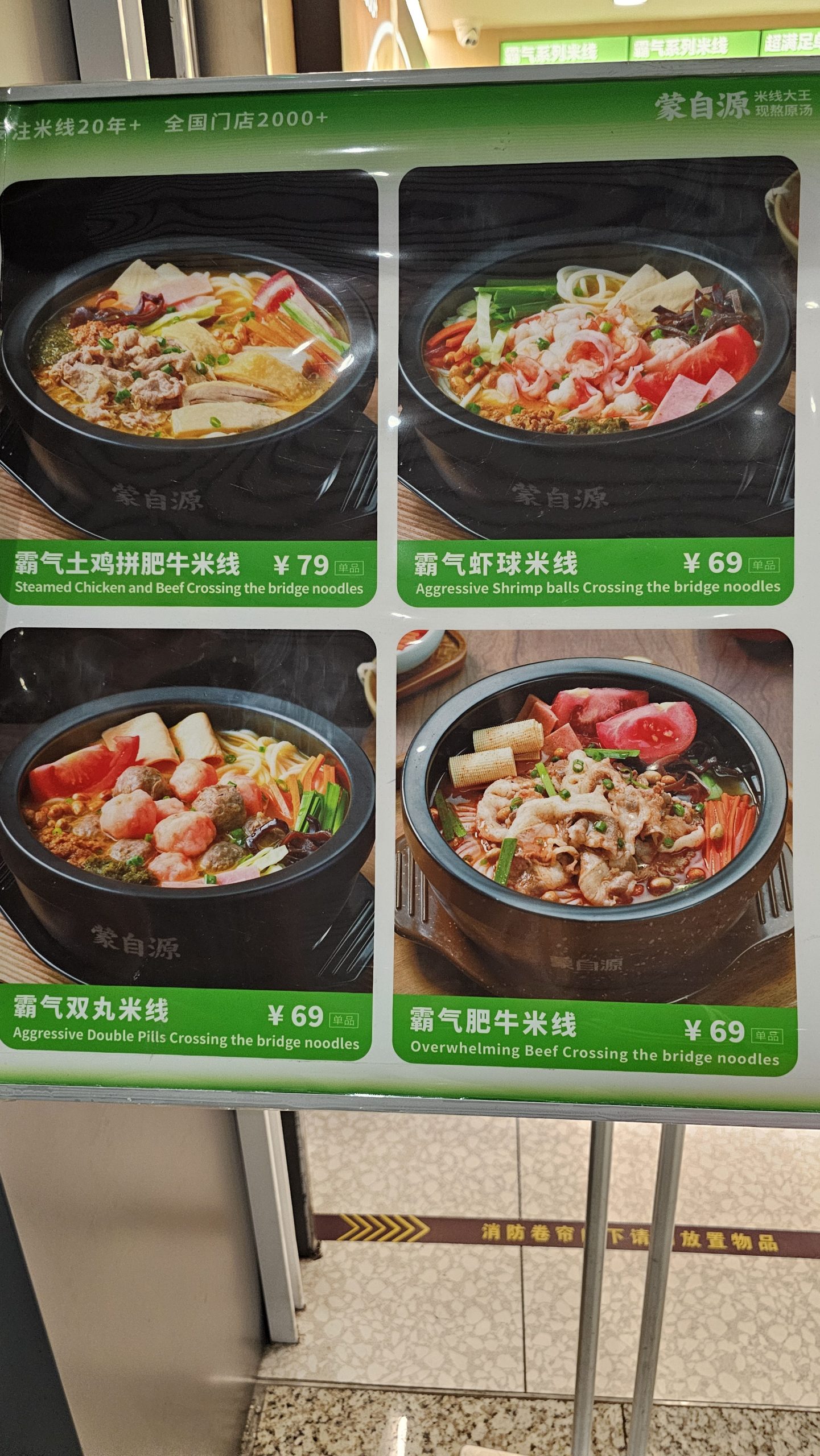
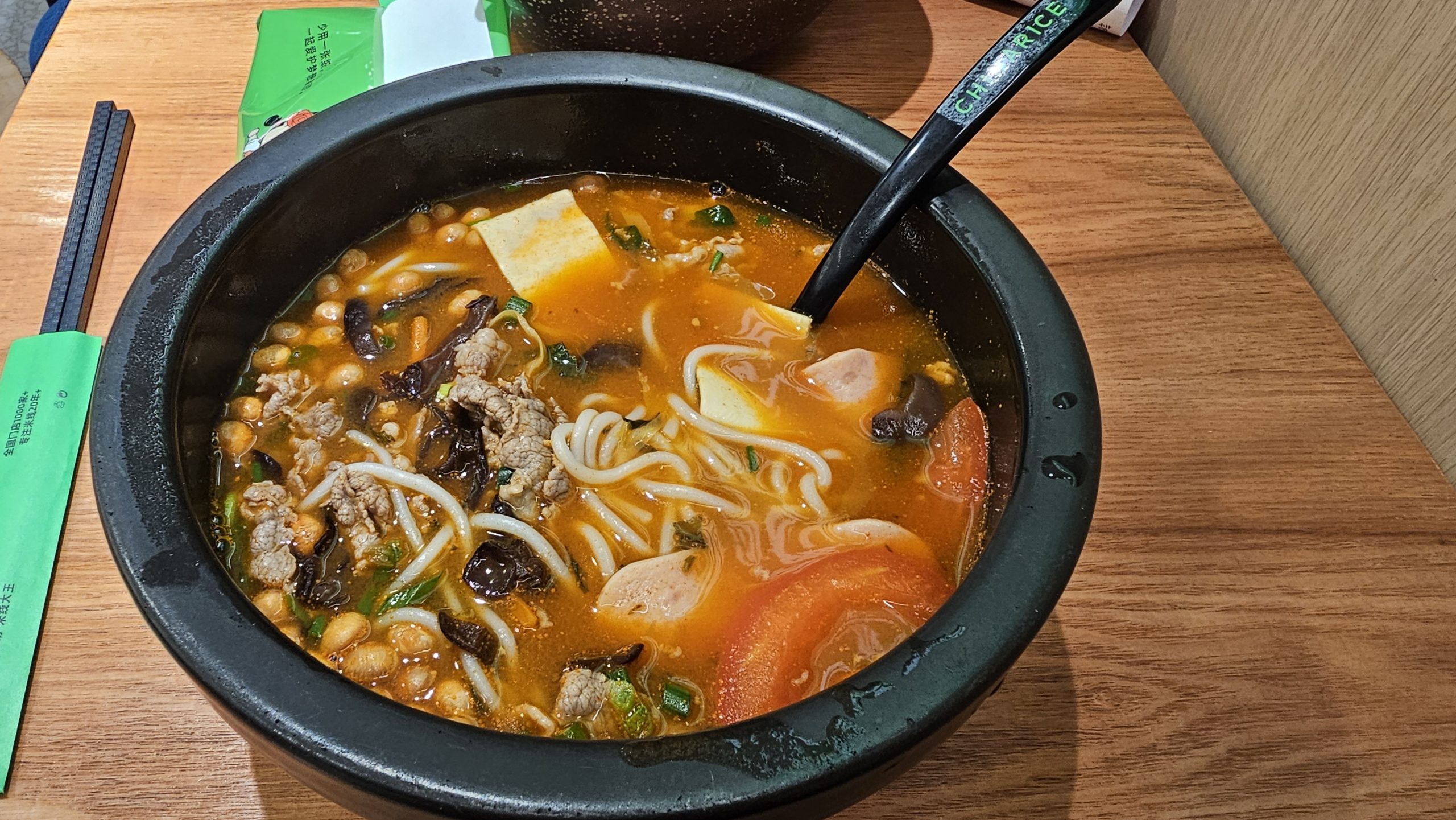
It doesn’t really sink in for Dave and me that we’re actually going to China until we’re standing in a tiny noodle bar at Guangzhou airport, trying to decide whether Aggressive Shrimp Balls Crossing the Bridge Noodles or Overwhelming Beef Crossing the Bridge Noodles would be the better dinner.
We go for the latter, and it doesn’t disappoint as our first meal in China. Dave’s delighted expression is a perfect proof that airport food in China can be far better than Western fast food.
The flight to Xiamen is under an hour, but we crash quickly [referring to sleep, as opposed to any mishap involving the plane – Dave] and wake to the rush of fellow passengers hurriedly disembarking the plane.
I forget my power bank (again – last year customs confiscated it from my checked-in suitcase. Don’t do that…) and Dave leaves his favourite vest behind. Fortunately, airport service is beyond efficient; while I wait for my suitcase, Dave has already collected his vest from lost-and-found.
We’re happy to see Anne, who, for me, embodies the discipline and dedication of a kung fu student. Anne started training over Zoom during Covid, attended every class each week, graded a few of her patterns remotely, and without fail comes to yearly training camps in Italy and now, for the second time, to China. The team is complete, and after a two-hour drive we’re welcomed by Master Su’s grandson and off we go to bed after a long trip.
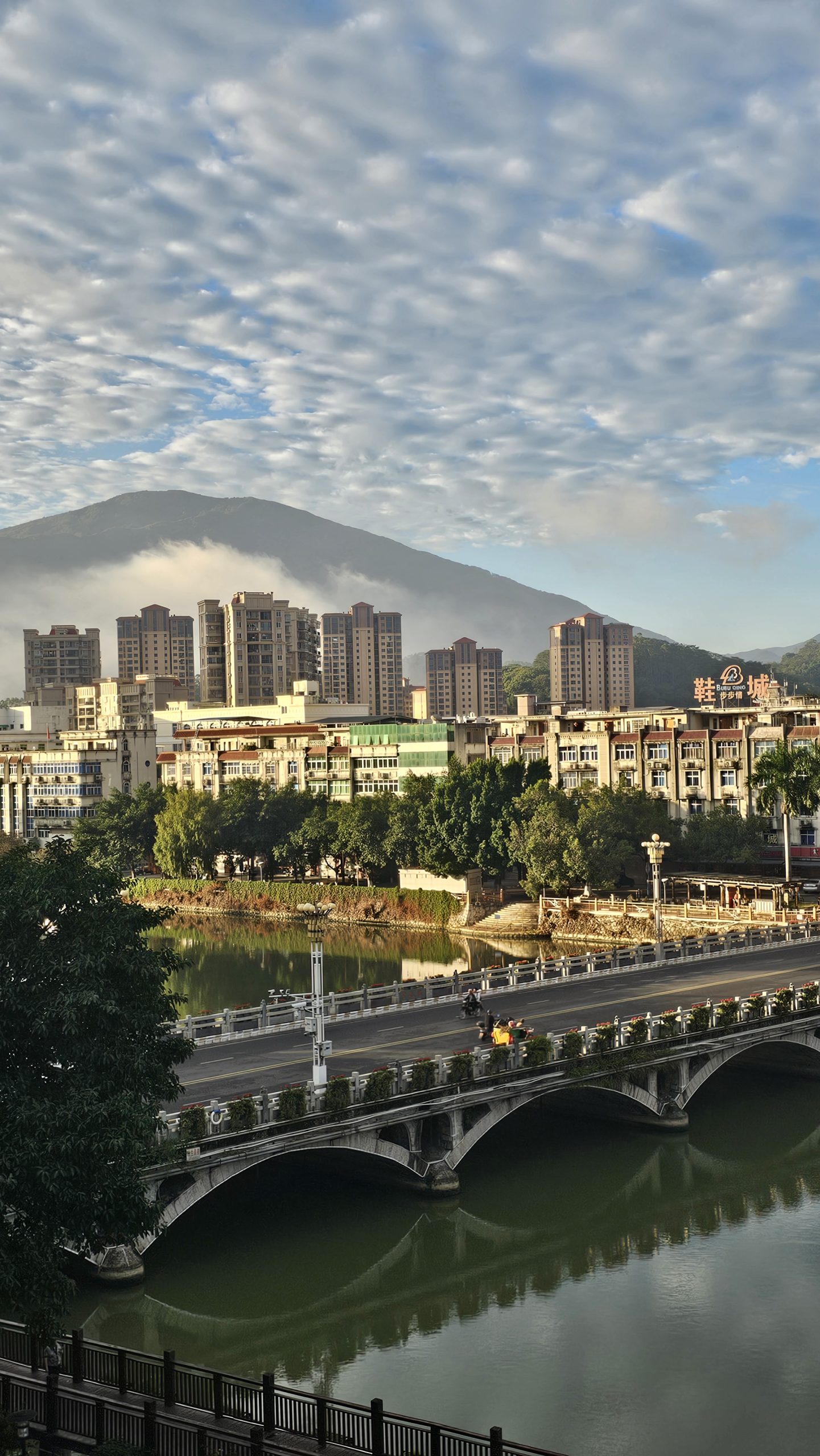
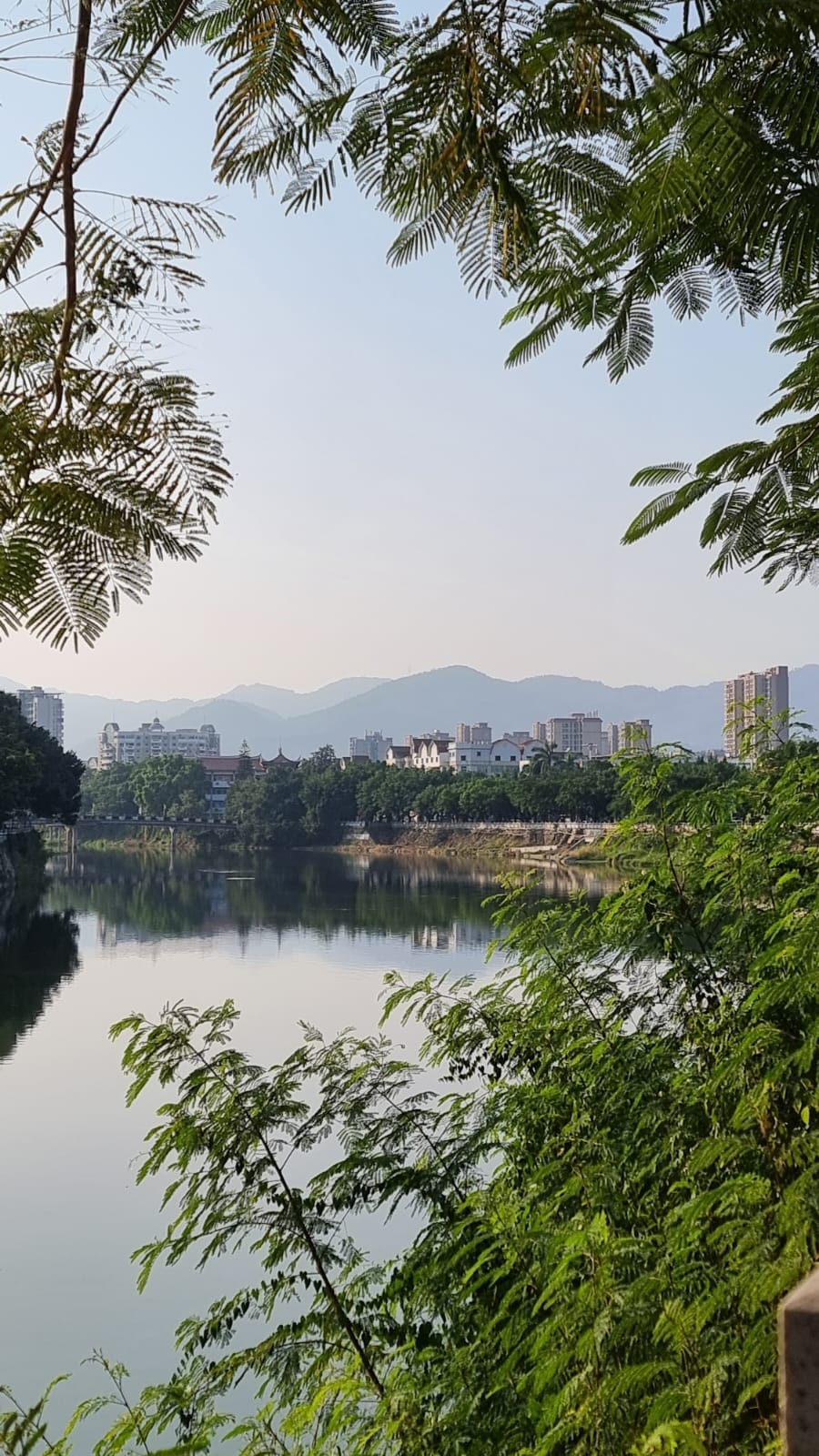
After a surprisingly good night sleep I’m watching from my window the town slowly waking up: people strolling and jogging along the river and beautiful green hills wrapping Yongchun in a gentle hug of first rays of sun. This is the image I’ve kept in my mind since last year when I sat in front of the window mesmerised by the view. Maybe it’s the nature and the expansive horizon which I cannot see from my flat in the centre of London or maybe it reminds me of the Bieszczady mountains in Poland or the Sila mountains in Calabria. It’s hard to put into words, this fuzzy, warm feeling of being in a familiar place again.
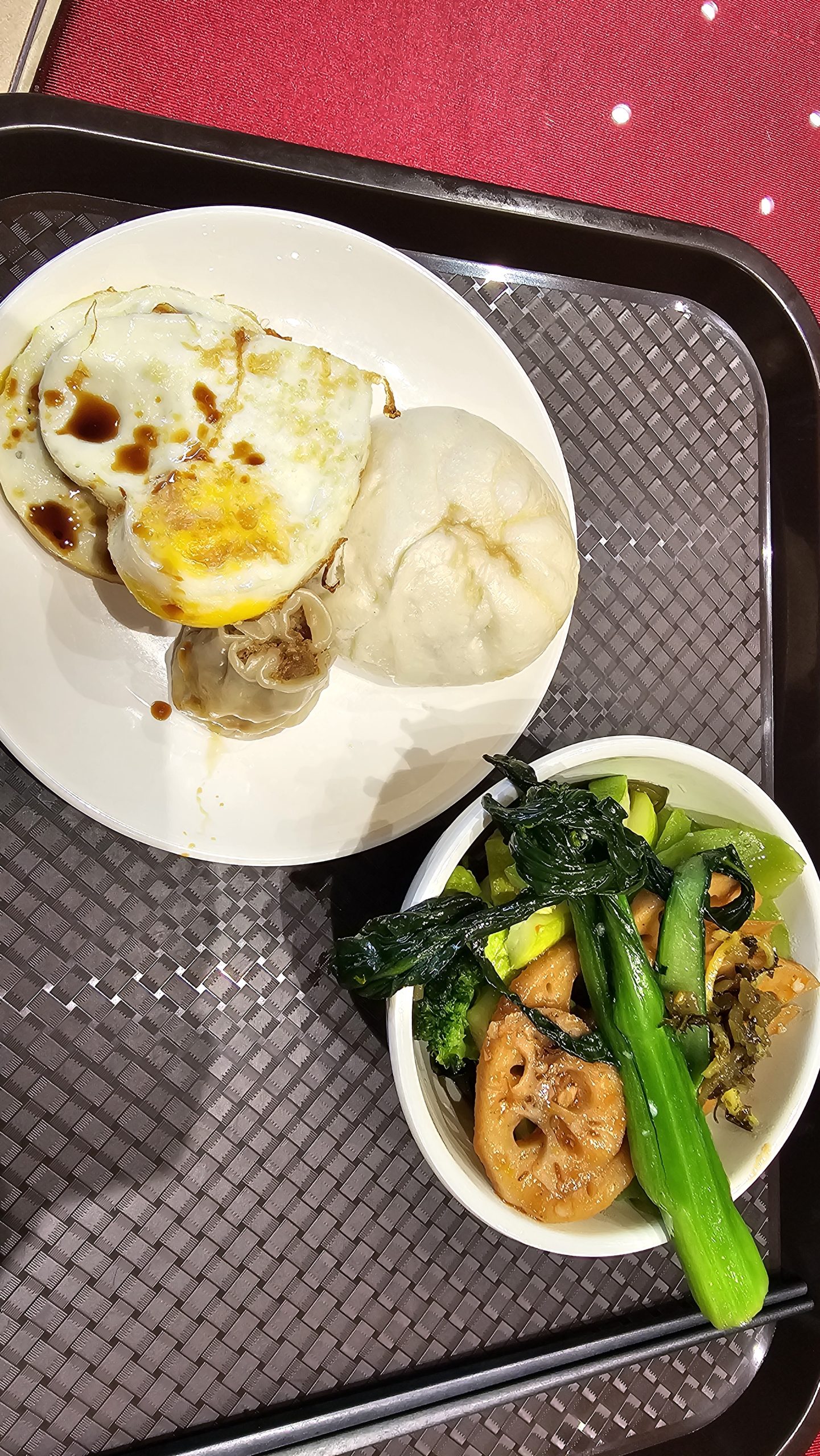
Back to practicalities and our long-awaited breakfast! We’re definitely creatures of habit, and while Dave and Anne go straight for coffee and a bowl of noodles, I have my usual: well-cooked eggs, steamed buns, lots of veggies, and a cup of tea. We all missed the Chinese breakfast with all the different flavours!
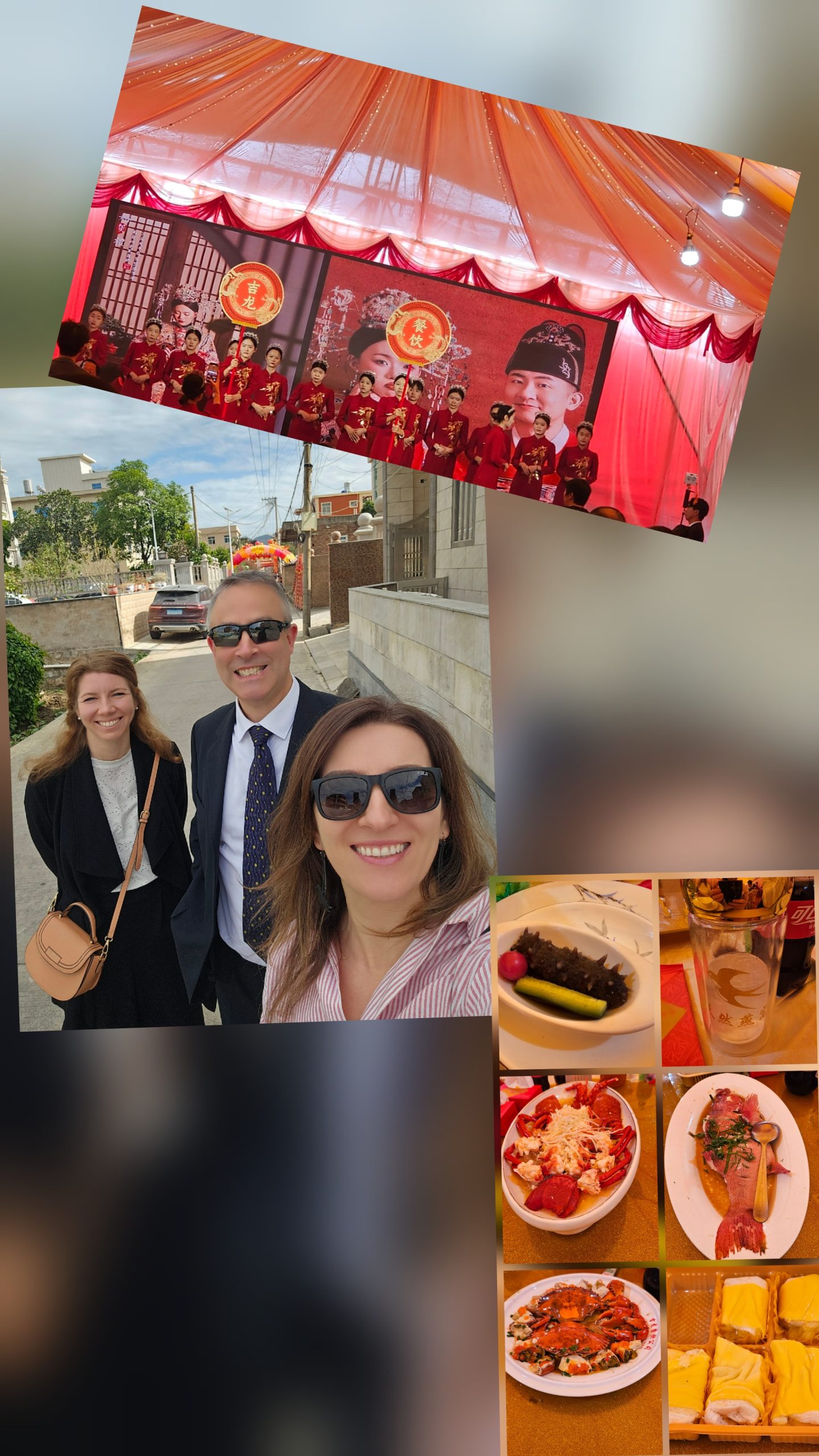
Our first day in Yongchun is full of surprises. Master Su tells us the afternoon is already planned, and we’ll be going to a wedding in the countryside. Exciting, as none of us has experienced it before.
Tip: if you want to see the chief instructor in an unusual outfit (a suit), invite him to a wedding party!
The party is held in a massive red and yellow tent with over 300 guests, and a huge screen above the stage shows photos of the newlywed couple. It’s a vibrant mix of colours, followed by an incredible spread of local dishes including delicacies like bird’s nest drink, lobster and sea cucumber.
After the wedding we visit two of Master Su’s students, share tea, and admire exercise equipment one of them keeps in his office. As Dave says, you can always practice crane blocks or other techniques while waiting for the kettle to boil. It seems they share the same attitude!
That evening we start our first training session and see how our patterns have changed since last year. This is also the first time when I hear weidao describing our patterns. A good achievement for a non-Chinese student learning such a beautiful and intricate style like Yongchun White Crane and acknowledgment of Dave’s teaching skills and ability to impart his understanding of how the movements should be expressed.
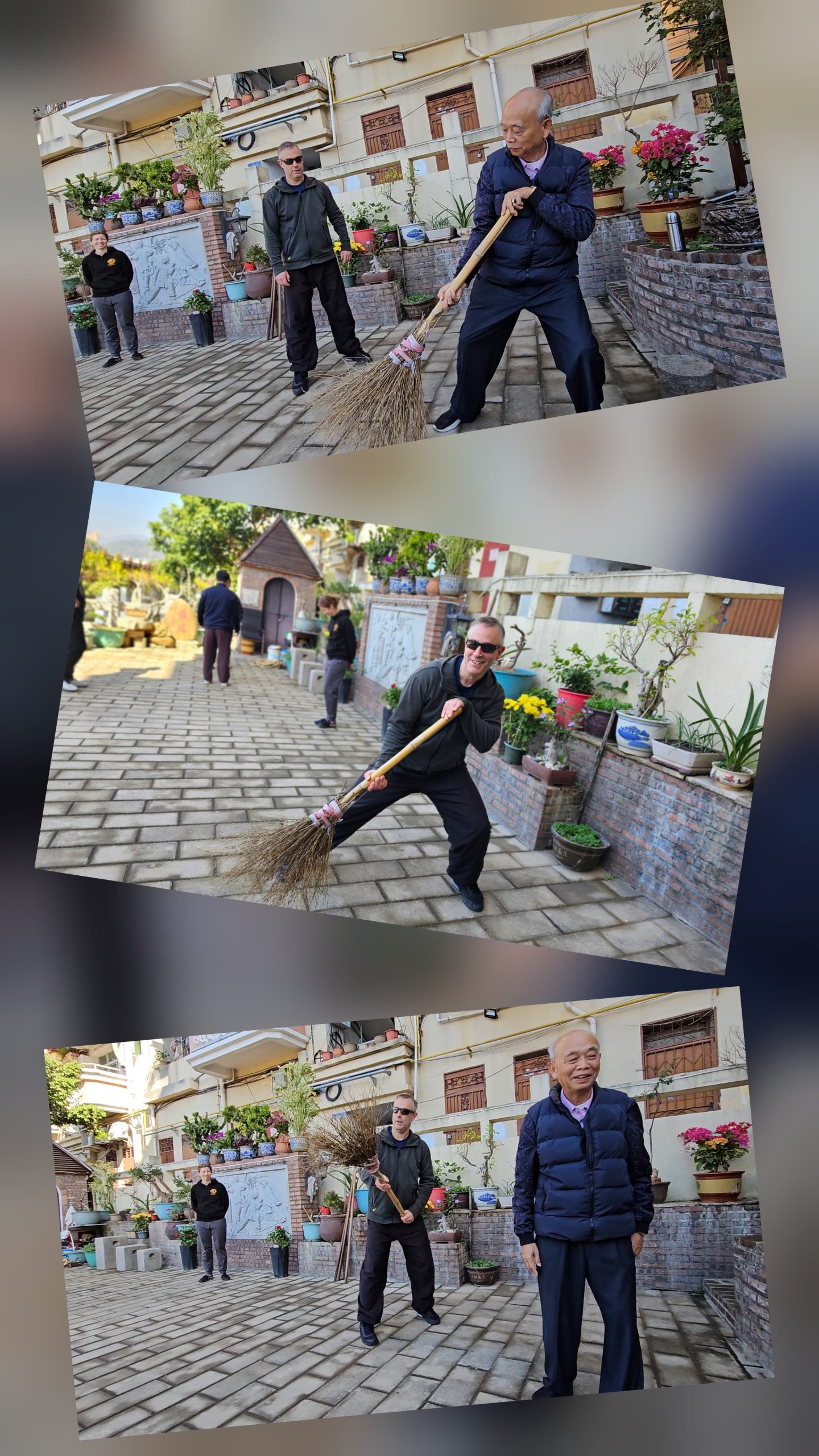
The next morning, we practice in Master Su’s courtyard by the river. It’s sunny—hard to believe it’s the end of November—and I’m wearing a T-shirt, while concerned locals wrapped in layers keep asking if I’m cold.
Training kung fu is like learning Chinese characters—many layers, from technical to more elusive and harder to master aspects like expressiveness and application but sometimes a simple broom can help to make the movement feel real!
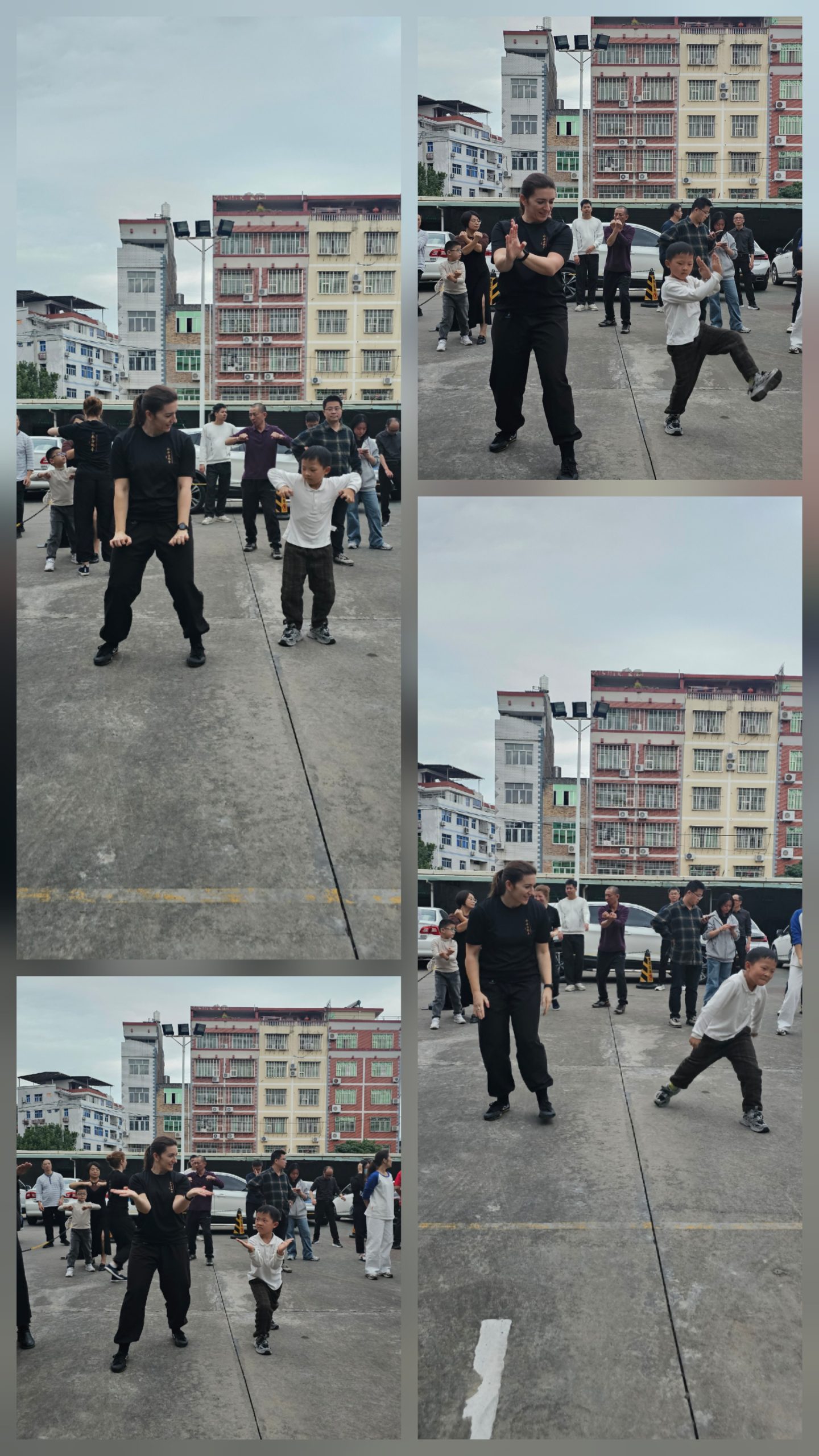
In the afternoon and the following day, we practice a newly created form called Shibashi, composed of 18 moves. It was put together by Master Su Jun Yi (Master Su’s son) and is taught to employees of various companies and civil servants in Yongchun. The aim is to introduce and promote White Crane style to wider public. Soon we discover that we’ll be helping to teach local TV staff. In the afternoon we end up teaching small groups outside the TV headquarters. There’s a lot of concentration and laughter as moves that come easily to us prove much harder for some of the “students” to copy.
I have the most diligent and enthusiastic student of all!
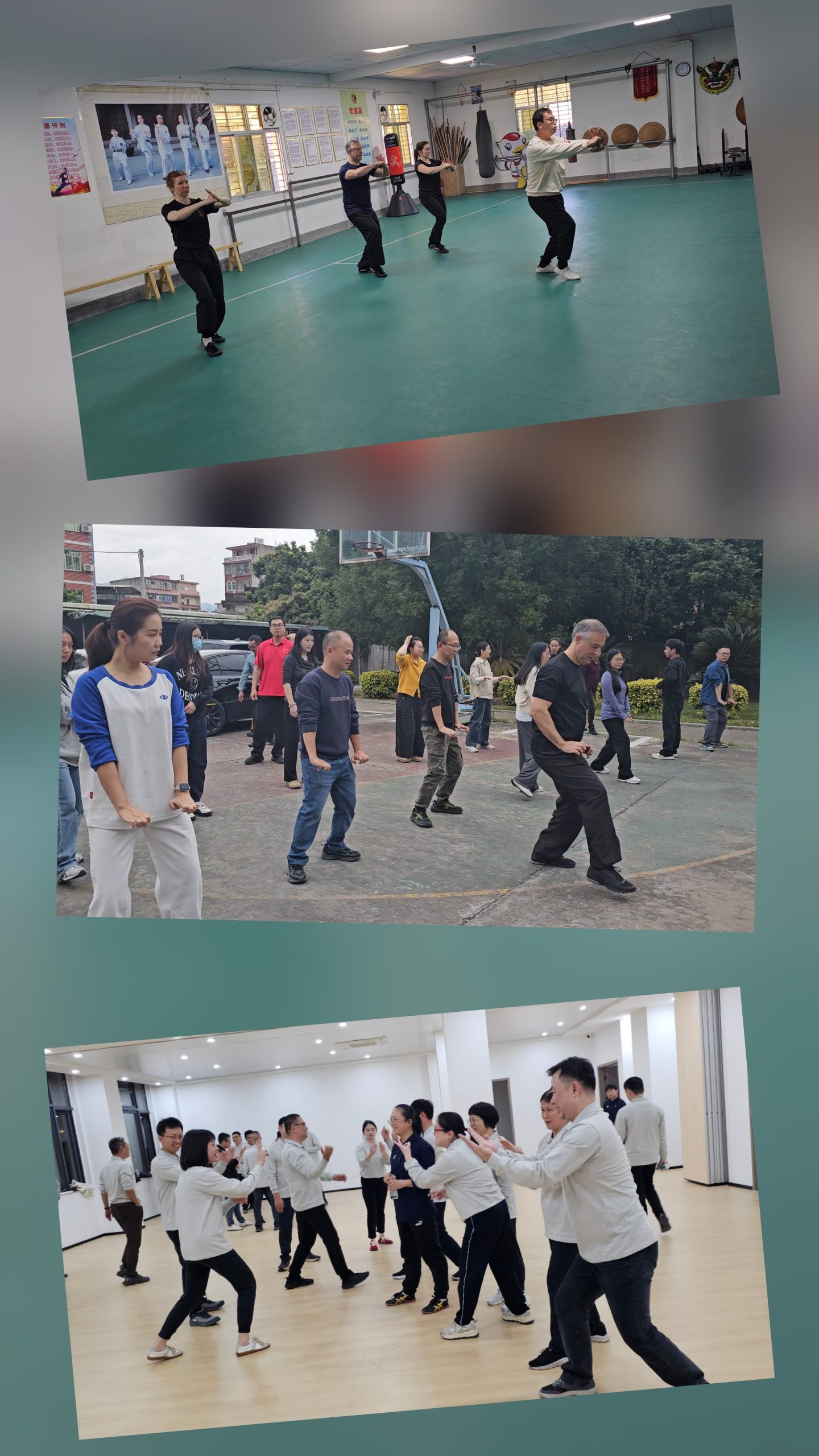
The next two days are marked by two 3h sessions with a break for lunch at our favourite little family-run restaurant next to the training hall, a mandatory (for me at least) short power nap after lunch and more training in the afternoon. The evening brings another unforgettable sensory experience as we are invited to Master Su’s place for homemade summer rolls. Fujian version of spring rolls is from a different league to tiny, deep-fried rolls you know from Chinese restaurants in London. These rolls are made of delicate, thin pancakes, filled with pork, tofu, puffed rice mixed with seaweed, mushroom, greens, coriander, carrots, onion and chopped peanuts with sugar that add incredible crunch. And they are huge! We all have one (or two…) too many but it is very hard to restrain yourself as Dave warned us earlier.
Thursday morning, we are back to training and my left forearm is feeling the effect of learning a new weapon pattern and repetition of the same movements over and over. Fortunately, for my aching tendons, the afternoon is off and after lunch we head straight to the museum of Yongchun vinegar 永春老醋 This very modern and beautifully designed museum is adjacent to the training hall and every morning the smell of freshly brewed vinegar permeates the hall. Another to be added to the list of Yongchun weidao!
Yongchun vinegar is often listed next to the other three famous Chinese vinegars (produced in Shanxi, Zhejiang and Sichuan provinces). Each has a distinct taste, but what makes the Yongchun vinegar special is the fermentation process. Freshly brewed vinegar made of glutinous rice and red yeast is gradually mixed with older vinegar and stir-fried sesame seeds are added to enhance the flavour. Longer the aging time better the taste. As the saying on the museum wall goes: “It takes three years to become sour, five years to produce flavour, ten years to be good products, and a hundred years to be masterpiece.” You could almost compare it to the life-long process of learning kung fu…
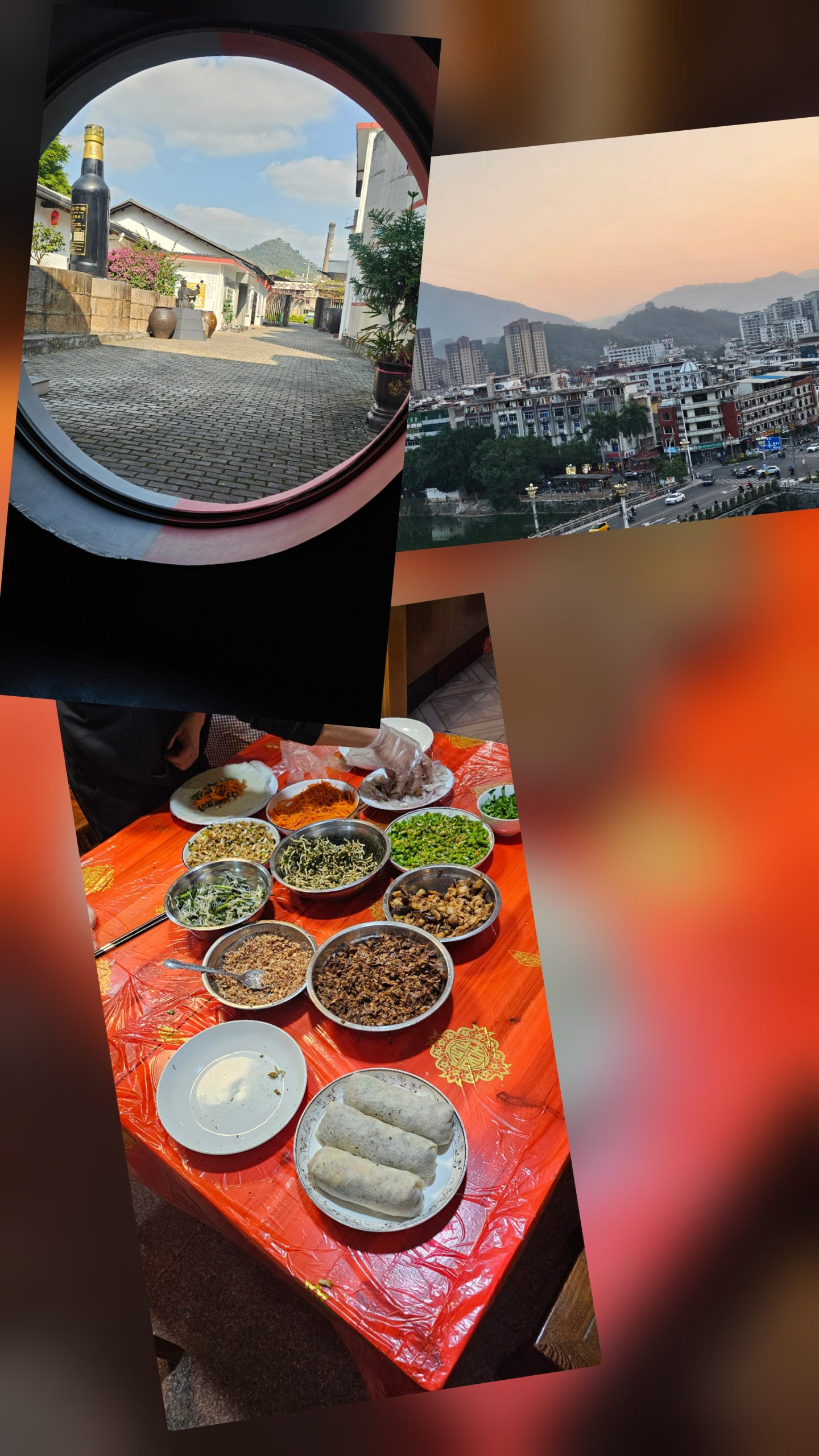
After the museum visit, Anne explores the older part of Yongchun, and we later regroup on the rooftop bar with a cup of coffee to admire the sun setting over the hills. On the opposite side a pale full moon rises over Fang Qiniang Temple accompanied by a swoop of little swallows learning to fly.
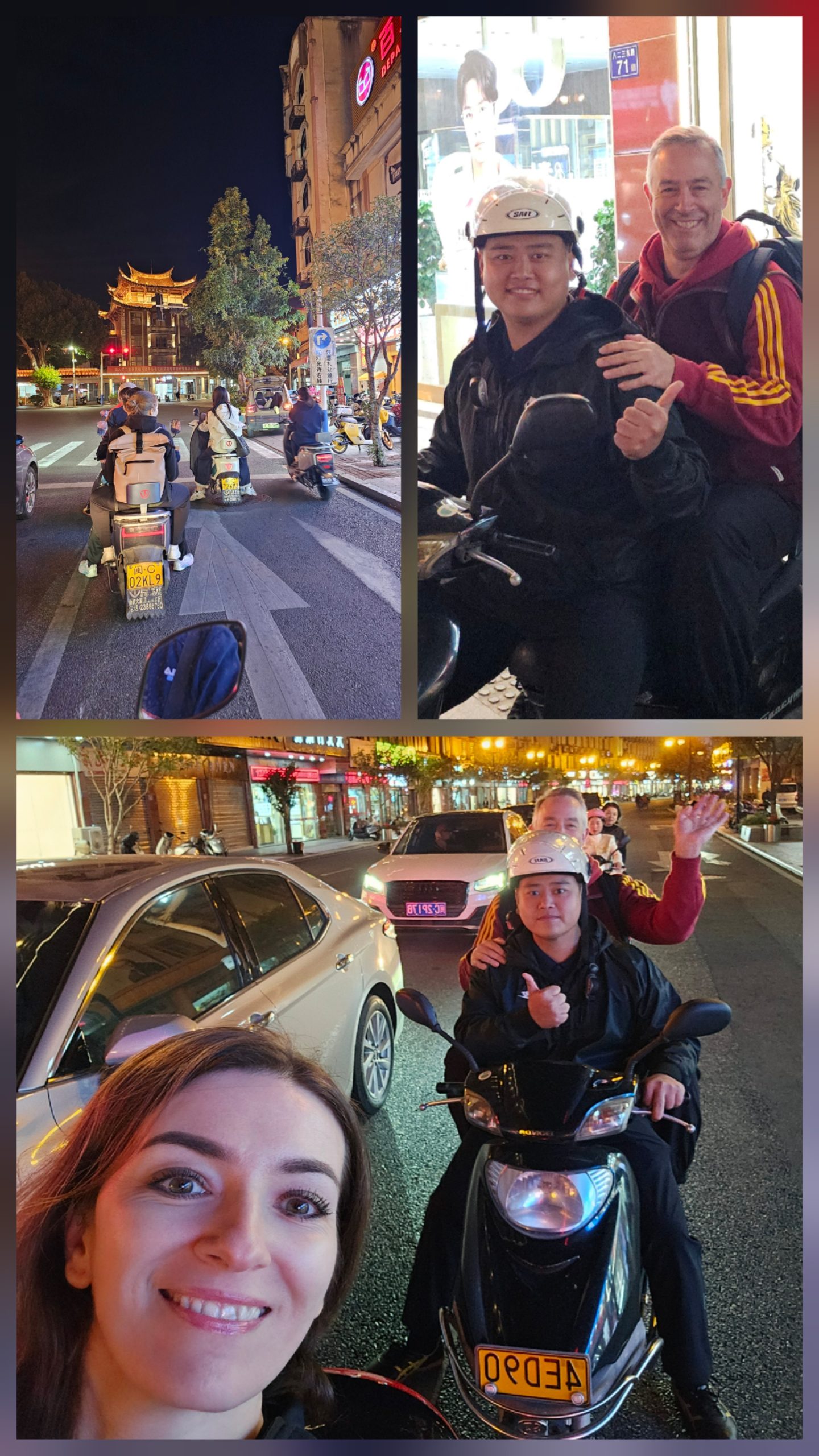
After dinner we are driven on electric motorbikes to teach Shibashi pattern this time to civil servants from the local government. This time the group is much bigger, and the “students” seem more focused and serious about getting the moves of Shibashi right. It must be the diligence and seriousness of the public servant’s role.
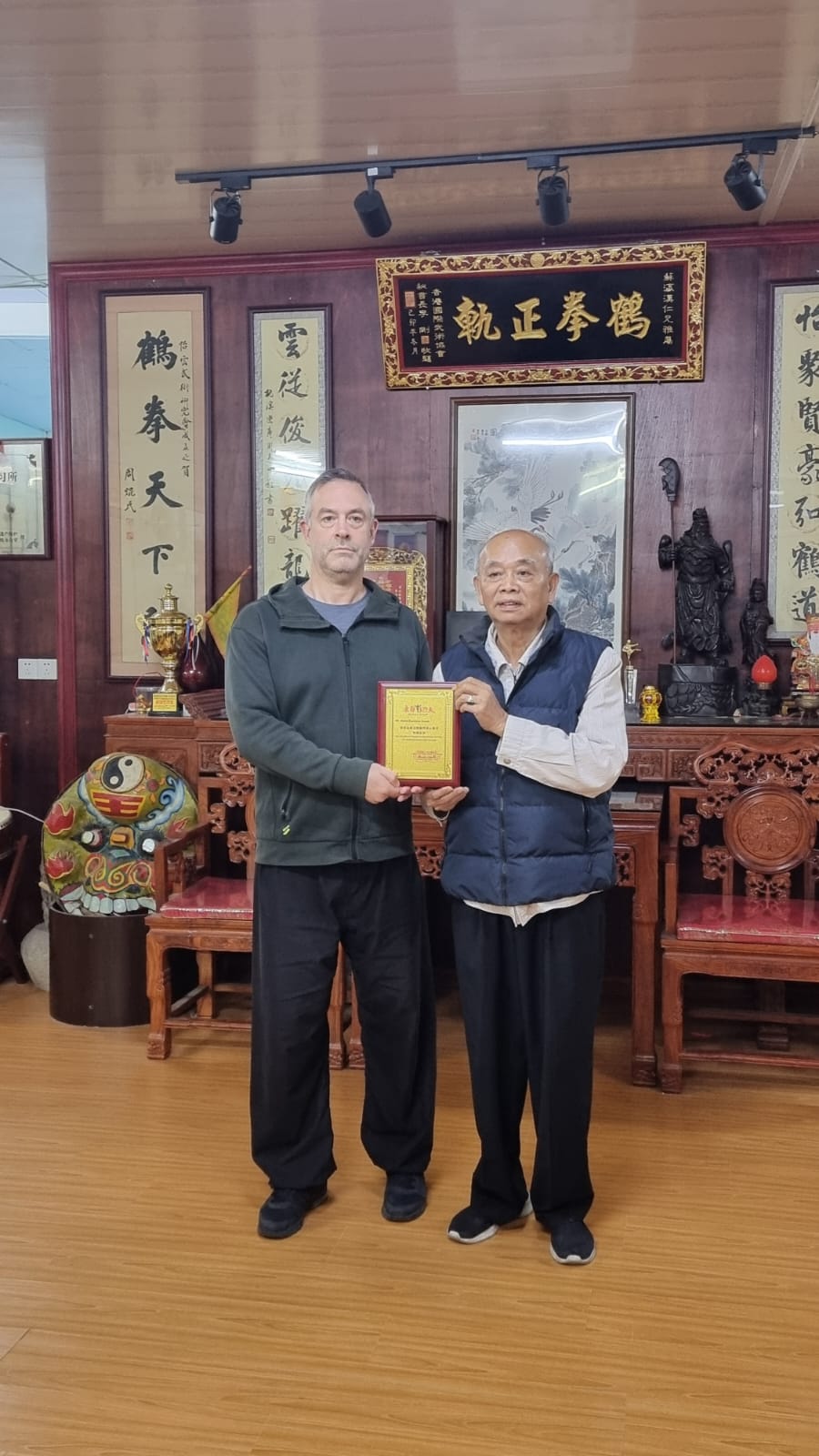
Friday is another day of polishing our newly learnt patterns, clarifying details and also admiring the beauty of staves that Master Su is demonstrating and explaining the superior quality of non-treated wood. In the afternoon we proudly witness Dave being awarded a certificate of recognition as an Inheritor of Yongchun White Crane issued by the Yongchun Kungfu Association. It is a great moment and at the time we don’t know yet that the shiny gold award will come very useful in less than 48h…
Special award calls for special celebration and after dinner we are unexpectedly invited to a restaurant for a quick drink which turns into a proper feast with several local dishes and an impressive 2 litre bottle of baijiu (52% vol spirit) set in the middle.
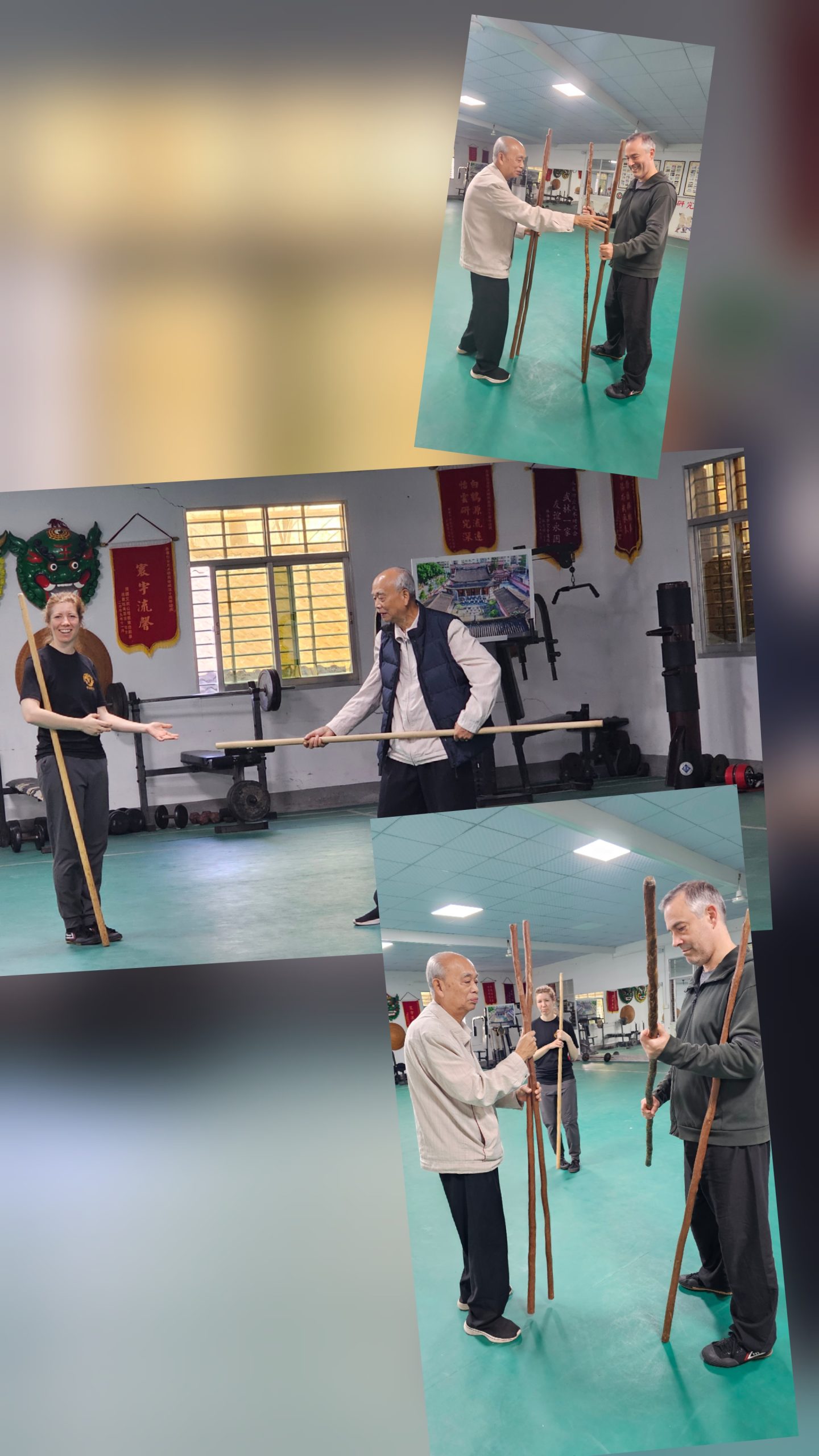
On Saturday we train along with old students of Master Su who came from Xiamen especially for two days to practice their patterns and spend time with their teacher. It is great to watch how learning kung fu creates connection and community and how proud Master Su and his children are of their students who learn with them and then go to impart the knowledge to their own students.
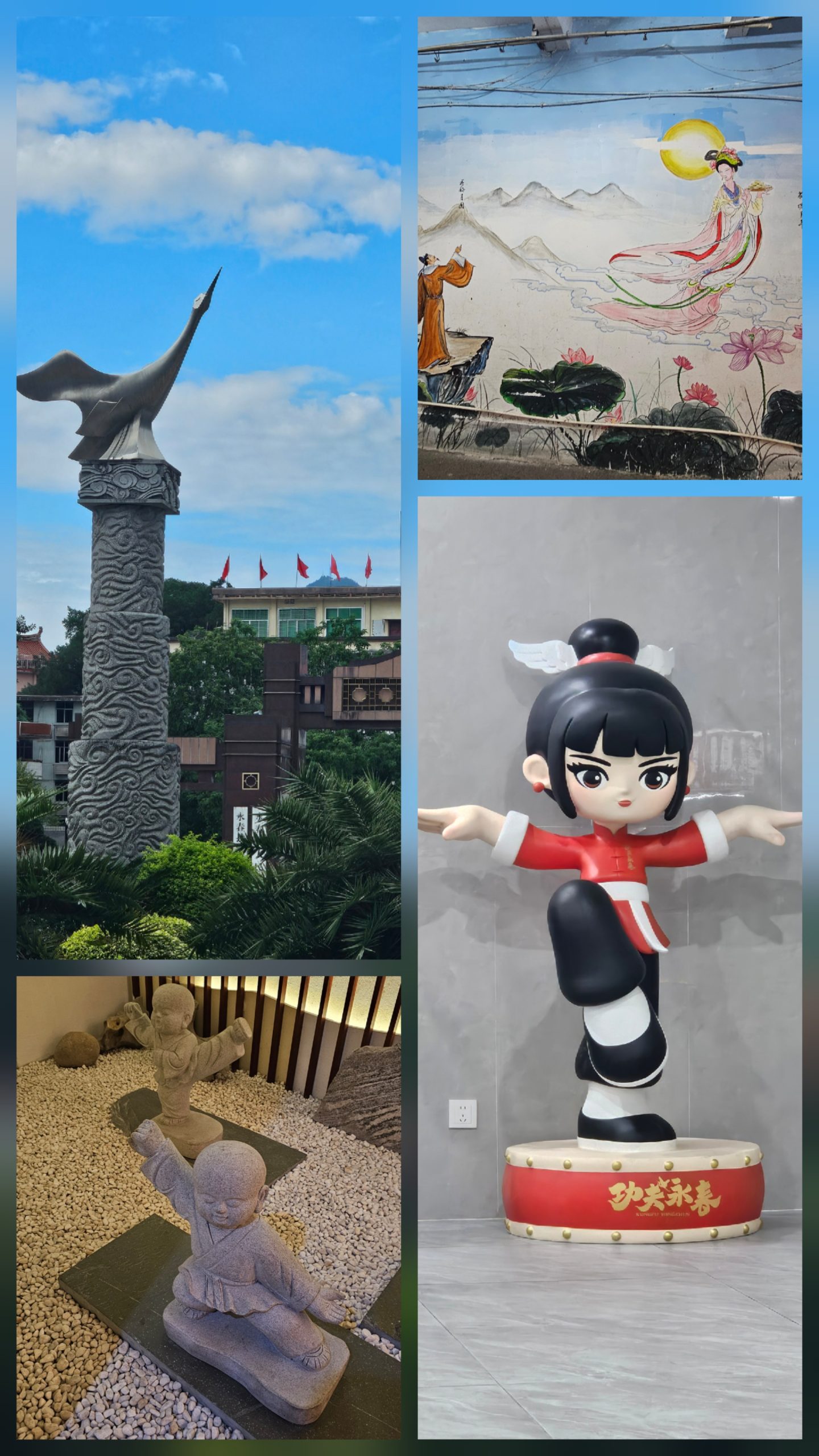
The kung fu spirit is present in Yongchun everywhere. From a statue of the crane, paintings on the walls to a huge screen above a bank entrance displaying a video of kung fu competitions (funny enough students from our club and Dave were part of the video).
We say goodbye to Master Su and his family, grateful for another amazing week of training, the kindness and openness with which they share their knowledge of White Crane style, unforgettable meals and moments when you feel part of the wider kung fu family.
On Sunday morning (or rather deep night…) we are kindly driven by Master Su’s students to Xiamen airport, where the weapon drama unfolds. After a long check-in with our passports and tickets scrutinised for over 20 minutes, Dave and I face two concerned security guards looking puzzled at three sets of Yongchun twin knives in our hold luggage. We use all sorts of arguments to convince them we should be allowed to take the knives out of China. Photos of our passports, tickets, and knives are taken and sent off for verification. Then, Dave presents his shiny recognition award which seems to seriously impress the customs officers, prompting another photo. Not sure which argument sealed the deal, but we are relieved to hear the knives can go back in the suitcases and onto the plane to London.
Before leaving China, we can’t resist a proper bowl of beef noodles, this time with a less aggressive sounding name 😉
To hold onto the memories of training and China a little longer during the flight back to London, I start watching a documentary: Martial Wisdom: To End Conflict with Strength. It follows a journalist meeting various kung fu masters across China. Guess who appears midway through the intro? Yes, none other than Master Su, his son and their students!
This was my personal account of Yongchun—the training, deepening my understanding of the style, connecting with people and absorbing that essence (weidao) of White Crane. But there’s so much more, and I’m sure Dave, Anne, or anyone else who’s been there will have their own story to tell.
If anything in my story sparked your curiosity about Yongchun White Crane style, come to class or turn on Zoom on Tuesday and Thursday evenings, and add “Trip to China with the Club” to your kung fu goals this year!